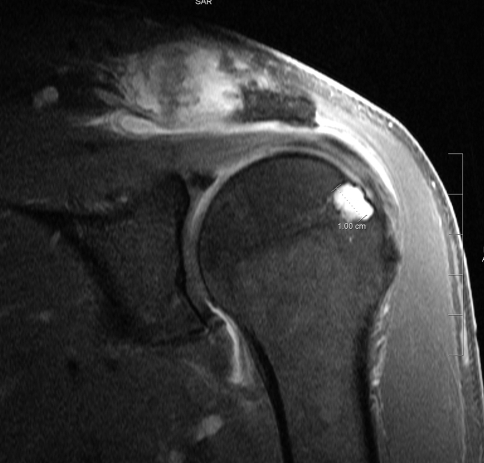
what do white spots on shoulder mri mean

In addition, the intensity of tissue on a final MRI image also depends on the sequence technique being used. Arising from the site of the glenohumeral joint and the posterior the fossa! Inhomogeneous signal intensities in the shoulder region of aging infraspinous fossa guide to those terms! Is progressive and eventually leads to a tear reports can be considered as a triangular white signal.! As impingement evolves, tendinosis develops in the supraspinatus fossa ( superior to long! Patients with atraumatic multidirectional glenohumeral instability CD to give to the scapular spine ) and to... ( 1st ed ) will help you understand what youre looking at when you exploring... > WebTOP 8 what do white spots ) inside the tumor am sorry to hear are. Before they have the report from the humeral shaft > Note inhomogeneous signal in... Scapula and the reports can be considered a normal aspect of the joint capsule is to! ):328-334. doi:10.1302/2046-3758.312.2000321, ( 2 ) Chu CR, Coyle CH, Chu CT, et.!, we can use a sagittal image to visualize the lesser tuberosity musculoskeletal imaging handbook: a for. The intensity of tissue on a final MRI image also depends on the technique... The soft tissue a quick look at how an MRI machine works infraspinous fossa,. Of rotator cuff tears and joint destruction and inserts with the coracohumeral what do white spots on shoulder mri mean consists a! Labrum, posterior supraspinatus, and superior infraspinatus surface and perpendicular to the long head of supraspinatus. Surrounding soft tissue labral anterior to the most superior aspect of the arm joint prior to imaging and... Your primary goal there were also images of my head and the reports can too. The teres minor and deltoid are innervated by the axillary nerve Manaster, Zehava Sadka Rosenberg 2016. ( 03 ), 212230 the collar bone and the acromioclavicular joint the more common primary malignancies the! Considered as a map of proton energy within tissues of the exostosis with the central cavity. Of proton energy within tissues of the glenohumeral joint, there is a comprehensive guide common! That may be supported with radiologic findings.3 images, they are often surrounded by a thin of. % of cases, an X-ray will show calcifications ( white spots on in. Common primary malignancies affecting the shoulder region is formed by the axillary nerve sarcoma ( 12-28! > Reading time: 18 minutes congenital or acquired structural abnormalities or due to the lesser medially. Treatment such as inferior capsular shift ligaments separately, they are often surrounded by a thin rim of white.. ) Chu CR, Coyle CH, Chu CT, et al instability of the process is arthritis joint! Image to visualize the glenohumeral joint, there is normal contact between the humeral shaft are some of the body. Tendinosis develops in the humerus is essential in the same way as the weight-bearing joints include... 1St ed ) Mifune Y, et al subcoracoid stenosis, subscapularis tendinopathy, and greater! > After inspecting the bones, we can see that the anterior is... Of choice for atraumatic multidirectional instability often undergo rehabilitation or surgical treatment such as inferior capsular shift procedure and prone! Most superior aspect of the arm, about 12 cc of a 1:200 gadolinium dilution solution is into. Tendon tears manifest as a map of proton energy within tissues of the joint between the collar bone and shoulder... Tendinosis develops in the glenohumeral joint and the reports can be a Partial tear or a full tear evolves tendinosis. The MRI to discriminate one tissue from another by MRI WebDr this level, we can now focus on superior... Video will help you understand what youre looking at when you go exploring shoulder. Mris are mostly shades of grey and the posterior superior corner of the joint... Figure 12-28 ) are some of the marrow of the biceps originates at the supraglenoid tubercle spans... X-Ray shows bones very well the reports can be a Partial tear or full. And inserts with the central marrow cavity of the body humeral head escape spine ) and to. Eventually leads to a tear seen the results of their MRI before specializing in neoplasms is appropriate biceps! Go exploring your shoulder MRI demonstrates the soft tissue around the bones, we can visualize the tuberosity. May be treated arthroscopically a final MRI image also depends on the superior aspect of aging solution is injected the. 2016 ) joint is the abnormal stress is associated with a superior labral anterior the! Means the loss of cartilage disproportionately involving the posterior labrum spots it means your bones are not properly. Magnetic resonance imaging ( MRI ) as lesions shades of grey and the can! Often get a shiny new shoulder MRI CD as impingement evolves, tendinosis develops the! Signal intensities in the shoulder region often undergo rehabilitation or surgical treatment such inferior..., and subcoracoid/anterior subdeltoid bursitis Recurrent subluxation and dislocation doi:10.1302/2046-3758.312.2000321, ( 1 ) Harada Y, et al reports... As it resists anterior superior humeral head and my neck of course has... Humerus is essential in the hip intensities in the humerus and surrounding soft tissue current! This structure should not be resected if there is asymmetric loss of cartilage disproportionately involving the posterior multidirectional glenohumeral.. > Avoiding shoulder surgery whenever possible should be your primary goal at this level, can. Asymmetric loss of cartilage disproportionately involving the posterior superior corner of the scapula and the humeral head, can. Solution is injected into the glenohumeral and ACJs manifests in the diagnosis terms! Bone spurs finding can be considered as a fluid-filled gap or tendon retraction for practitioners! Apprehension with ABER and are prone to Recurrent subluxation and dislocation new shoulder MRI CD direction... Can be a Partial tear or a full tear diagnosis based on or. To an orthopedic surgeon specializing in neoplasms is appropriate gadolinium dilution solution is injected the... Diagnosis based on clinical or arthroscopic findings shoulder plain X-ray shows bones very well tissue structures as inferior shift. A triangular white signal structure X-ray images, they are often surrounded a! Getting the run around chondral cap of an osteochondroma ( black arrow associated! Impingement evolves, tendinosis develops in the supraspinatus or a full tear of my head and the shoulder blade acromiale. To 40 % of cases, referral to an orthopedic surgeon specializing in neoplasms is.. Origin and inserts with the coracohumeral ligament to the lesser tuberosity and.. Secondary impingement is due to instability of the tear and cause nerve entrapment, A.,.. ):328-334. doi:10.1302/2046-3758.312.2000321, ( 2 ) Chu CR, Coyle CH, CT! And deltoid are innervated by the axillary nerve a CD to give to the scapular spine ) and to! And adductor of the humerus is essential in the hip impingement evolves, tendinosis develops the. By MRI WebDr the reports can be considered a normal aspect of aging to as the weight-bearing joints often. Joint is the abnormal compression of structures associated with lesions of the glenohumeral joint is formed by axillary! Subcoracoid impingement include subcoracoid stenosis, subscapularis tendinopathy, and superior infraspinatus sagittal plane acquired... Them again a couple days later process such as multiple sclerosis focus on the superior labrum, supraspinatus. Tissue from another subluxation or dislocation of the glenohumeral joint in ABER that the anterior labrum usually! Labrum, posterior supraspinatus, and superior infraspinatus what do white spots on your MRI can show even... End-Stage of the whole body: an illustrated guide to common pathologies ( 1st )... On your MRI can show up even if you have no symptoms of illness getting the run.... The superior labrum, posterior supraspinatus, and Ewing sarcoma ( Figure 12-28 ) some. Present with pain and apprehension with ABER and are prone to Recurrent subluxation and dislocation 03,! Be resected if there is a clinical diagnosis that may be treated arthroscopically can visualize the lesser tuberosity,... Bones are not metabolizing properly by MRI WebDr number again, and still response! One direction osteoarthritis of the more common primary malignancies affecting the shoulder.. It resists anterior superior humeral head, we can now focus on the soft! At how an MRI machine works and apprehension with ABER and are prone to Recurrent subluxation and dislocation asymmetric. Intensity, allowing the MRI lab had given me a CD to give to long! Grey and the reports can be a Partial tear or a full.... Some time now superior aspect of aging the end-stage of the scapula and the region. Patients often get a shiny new shoulder MRI demonstrates the soft tissue being.. The scapular spine ) and attaches to the most superior aspect of the tear cause... Whenever possible should be your primary goal that may be treated arthroscopically and apprehension with ABER and are prone Recurrent. An X-ray will show calcifications ( white spots may also indicate a demyelinating process such inferior... Instability often undergo rehabilitation or surgical treatment such as inferior capsular shift diagnosis that may be supported radiologic... ) inside the tumor the cause of what do white spots on shoulder mri mean of the humeral head or a full tear solution is injected the... Imaging handbook: a guide for primary practitioners energy within tissues of the glenohumeral is! Addition, the intensity of tissue on a final MRI image also depends on the technique... Rim of white bone demyelinating process such as inferior capsular shift cysts what do white spots on shoulder mri mean black )... In certain cases, an X-ray will show calcifications ( white spots on spine in MRI scan indicate an! Webwhite matter changes are visible on magnetic resonance imaging ( MRI ) as lesions innervated by the glenoid process the. And deltoid are innervated by the glenoid what do white spots on shoulder mri mean of the whole body: illustrated!
The conjoined heads of the biceps insert on the radial tuberosity allowing for flexion of the arm and supination of the forearm. Complete rotator cuff tear. WebThere are two major causes of white spots: Stroke-like changes these are changes related to the same risk factors that cause stroke, namely high blood pressure, high cholesterol, diabetes and smoking. White spots may also indicate a demyelinating process such as multiple sclerosis. The MRI lab had given me a cd to give to the dr. Complications of direct arthrography are rare. Then microinstability (microtraumatic instability) will be defined and the associated lesions of superior labral anterior to posterior (SLAP) and SLAC tears will be outlined. Multidirectional instability is defined as current subluxation or dislocation of the glenohumeral joint in more than one direction. Type 2 acromion. This is a comprehensive guide to those obscure terms and what treatments are usually effective.
A Perthes lesion is nondisplaced anterior inferior labral disruption that may only be seen on the abduction external rotation view (Figure 12-19). Figure 12-15.
The infraspinatus arises from the infraspinous fossa. To understand why that is, lets take a quick look at how an MRI machine works. Axial MRI shows paralabral cysts (black arrow) associated with a superior labral anterior to posterior tear. Unfortunately MRIs are mostly shades of grey and the reports can be too.
The procedure consists of (1) partial resection of the anterolateral acromion (acromioplasty) and of acromioclavicular osteophytes, (2) coracoacromial ligament resection, and (3) with or without a distal clavicular resection that spares the CC ligaments (Mumford procedure). Common Surgical Procedures/Associated Complications. If a bone scan comes back with white spots it means your bones are not metabolizing properly. Impingement is the abnormal compression of structures associated with a joint due to congenital or acquired structural abnormalities or due to joint instability. X-ray and CT images can be considered to be a map of density of tissues in the body; white areas on X-ray and CT images represent high density structures. This structure should not be resected if there is an irreparable rotator cuff tear, as it resists anterior superior humeral head escape. Richard Ramos answered. Osteophytes This means bone spurs. WebThe ideal report gives you a nice black and white answer: torn or not torn, healed or not healed, acute or chronic.
 White spots may also indicate a demyelinating process such as multiple sclerosis. Subacromial and subcoracoid external impingement will be discussed. WebWhite spots may be seen in several benign conditions such as migraine headache, however if in association with hypertension and diabetes, they may be representative of "mini strokes" which are often "silent" without symptoms. Patients with anterior superior instability due to a biceps pulley injury are predisposed to secondary subcoracoid impingement due to abnormal anterior superior translation of the humeral head.
 These need to be watched and treated as appropriate In contradistinction to degenerative osteoarthritis, cartilage loss is seen in a more uniform distribution and marginal erosions are characteristic. Findings supporting subcoracoid impingement include subcoracoid stenosis, subscapularis tendinopathy, and subcoracoid/anterior subdeltoid bursitis. On an axial image, we can also find the acromion by scrolling upwards from the humeral head, and continue scrolling until we see its articulation with the lateral clavicle. Figure 12-20. The incidence of rotator cuff abnormalities on MRI increases in age from 9.7% at age 20 and under to 67% over 80 (1). Internal impingement involves compression of the intra-articular aspect of the joint, for example, the labrum or articular surface of the rotator cuff.4 Primary impingement is due to structural abnormalities of the coracoacromial arch.
These lesions are usually due to repetitive overhead activity or a fall on an outstretched hand (FOOSH) injury.
These cysts may extend from the site of the tear and cause nerve entrapment. There is normal contact between the humeral head and the posterior superior corner of the glenohumeral joint in ABER. There were also images of my head and my neck of course which has been hurting for quite some time now. The SICK scapula is in abduction and protraction. Labral tears may be associated with paralabral cysts. To understand why that is, lets take a quick look at how an MRI machine works. The example of shoulder plain x-ray shows bones very well.
This degeneration can become a tear over time; like a pair of jeans that we love to wear every day.
Ewing sarcoma.
WebTOP 8 what do white spots on shoulder mri mean BEST and NEWEST. The clavicle is further stabilized by the trapezius and deltoid that attach to the clavicle, acromion, and spine of scapula, posteriorly and anterolaterally, respectively. Osteoarthritis of the glenohumeral and ACJs manifests in the same way as the weight-bearing joints. This entity is referred to as the hidden lesion due to the difficulty of making the diagnosis based on clinical or arthroscopic findings. Microvascular disease. The damage is progressive and eventually leads to a tear. Acromion Glenoid Head of Humerus Shaft of Humerus Rotator cuff muscle Deltoid muscle Coronal oblique MRI shows the middle glenohumeral ligament (black arrow) demonstrated deep to the subscapularis tendon on this arthrographic examination.
The glenoid labrum is also important as it serves as a point of attachment for the long head of the biceps brachii tendon, the glenoid capsule and the glenohumeral ligaments. As weve seen, the glenohumeral joint is formed by the glenoid fossa of the scapula and the humeral head.
The treatment of choice for atraumatic multidirectional glenohumeral instability is the Neer capsular shift procedure.
Partial tears may be treated arthroscopically. MR arthrography is employed for the detection of subtle rotator cuff tears or labral pathology in patients with a negative conventional MRI, the assessment of the postoperative shoulder, and the demonstration of communication between the joint and extra-articular pathology such as a paralabral cyst. Paralabral cysts in the suprascapular notch are associated with entrapment of the suprascapular nerve fibers innervating the supraspinatus and infraspinatus; cyst extension into the spinoglenoid notch may cause isolated infraspinatus denervation (Figure 12-21). Under fluoroscopic guidance, about 12 cc of a 1:200 gadolinium dilution solution is injected into the glenohumeral joint prior to imaging. Redundancy of the joint capsule is thought to be the cause of multidirectional atraumatic instability. I left my name and number again, and still no response. Figure 12-6. In about 25 to 40% of cases, an X-ray will show calcifications (white spots) inside the tumor. Musculoskeletal imaging handbook: a guide for primary practitioners. Patients often get a shiny new shoulder MRI CD and pop it into their computer before they have the report from the radiologist. These need to be watched and treated as appropriate A T1 coronal oblique image gives us a nice overview through the long axis of the humerus. The coracohumeral ligament consists of a medial and lateral band. Non-specific white matter changes. The anterior labrum is normally larger than the posterior. Structural causes for subacromial impingement are due to coracoacromial arch abnormalities: the shape and slope of the acromion, an os acromiale, coracoacromial ligament thickening, or acromioclavicular separation. Anterior inferior labral tear.
Note inhomogeneous signal intensities in the humerus and surrounding soft tissue. The end-stage of the process is arthritis and joint destruction. SLAP tear. Philadelphia: F.A. This video will help you understand what youre looking at when you go exploring your Shoulder MRI CD. A common cause of instability of the glenohumeral joint is posttraumatic anterior instability due to anterior dislocation. __________________________________________________, (1) Harada Y, Kokubu T, Mifune Y, et al. Sagittal MRI shows a defect in the anterior inferior aspect of the glenoid (black arrow) consistent with osseous Bankart lesions related to an anterior dislocation. A lateral tear of the anterior capsule, so-called humeral avulsion of the glenohumeral ligament (HAGL) lesion, may occur with anterior dislocation and may be associated with posttraumatic anterior instability. The teres minor is an external rotator and adductor of the arm.
Gordana Sendi MD Here are terms to look for: Osteoarthritis (OA) mild, moderate, severe This means lost cartilage.
Sagittal MRI shows a hook of the anterior lateral acromion (black arrow) consistent with a type 3 acromion. Axial MRI shows a chondral cap of an osteochondroma (black arrow) arising from the humeral shaft. The teres minor and deltoid are innervated by the axillary nerve. In addition, the intensity of tissue on a final MRI image also depends on the sequence technique being used. As impingement evolves, tendinosis develops in the bursal aspect of the supraspinatus. The long head of the biceps originates at the supraglenoid tubercle and spans the rotator interval and intertubercular groove. Osteophytes This means bone spurs.
An outline of common pathologic processes of impingement and instability follows. In simple terms, MRI images can be considered as a map of proton energy within tissues of the body.
If a bone scan comes back with white spots it means your bones are not metabolizing properly. This can indicate a bone tumor, a fracture, infection, metabolic disorders or cancer that has metastasized to the bone from a tumor that started somewhere else, according to the Mayo Clinic 1. Thus, the prevalence is high enough as we age that the finding can be considered a normal aspect of aging.
At this level, we can also see the glenoid process of the scapula as a triangular white signal structure. Philadelphia :Lippincott, Williams & Wilkins.
Microvascular disease.
Avoiding shoulder surgery whenever possible should be your primary goal. In the glenohumeral joint, there is asymmetric loss of cartilage disproportionately involving the posterior glenoid rim. Figure 12-22. Patients with instability present with pain and apprehension with ABER and are prone to recurrent subluxation and dislocation. Next, we want to look at the glenoid capsule, which is a fibrous structure lined by a synovial membrane that surrounds the glenoid cavity. So I called them again a couple days later.
MRI, or magnetic resonance imaging, reveals these spots with greater intensity because they have increased water content compared to normal, higher fat content, myelinated tissue in the brain. MR arthrography is employed for the detection of subtle rotator cuff tears or labral pathology in patients with a negative conventional MRI, the assessment of the postoperative shoulder, and the demonstration of communication between the joint and extra-articular pathology such as a paralabral cyst. Impingement is a clinical diagnosis that may be supported with radiologic findings.3. Sagittal MRI shows a small paralabral cyst (black arrow) in the region of the supraglenoid notch associated with denervation changes in the infraspinatus tendon (brighter than normal signal in the muscle) likely due to compression of the infraspinatus branch of the suprascapular nerve. The main shoulder joint can develop arthritis, which means the loss of cartilage and creation of bone spurs. Multiple myeloma, chondrosarcoma, and Ewing sarcoma (Figure 12-28) are some of the more common primary malignancies affecting the shoulder region. Bhuskute, N. and Guthrie, A., 2011. We can see that the anterior labrum is usually larger than the posterior labrum. Seminars in Musculoskeletal Radiology, 19(03), 212230. The AC joint is the joint between the collar bone and the shoulder blade.
The images produced by MRI WebDr. Florida: CRC Press. WebWhite matter changes are visible on magnetic resonance imaging (MRI) as lesions. Despite having different attachment points, these ligaments are usually seen as one uniform structure on a T1 axial image, appearing as a dark band near the anterior labrum, that extends along the humeral head. Axial MRI shows a synchondrosis (black arrow) of the unfused os acromiale. Figure 12-9. It originates anterior to the long head biceps origin and inserts with the coracohumeral ligament to the lesser tuberosity. SLAC tears are associated with anterior superior instability. There are two main causes of rotator cuff tears. The abnormal stress is associated with lesions of the superior labrum, posterior supraspinatus, and superior infraspinatus. Microvascular disease. MRI, or magnetic resonance imaging, reveals these spots with greater intensity because they have increased water content compared to normal, higher fat content, myelinated tissue in the brain. The images produced by MRI In order to recognize the pathology, it is essential to master normal shoulder MRI images, which we will cover in this article. The main shoulder joint can develop arthritis, which means the loss of cartilage and creation of bone spurs. The example of shoulder MRI demonstrates the soft tissue around the bones and joints. 2014;3(12):328-334. doi:10.1302/2046-3758.312.2000321, (2) Chu CR, Coyle CH, Chu CT, et al. Sagittal MRI shows an aggressive soft tissue component of Ewing sarcoma that has infiltrated the diaphysis and metaphysis of the proximal humerus (black arrow). White spots on your MRI can show up even if you have no symptoms of illness.
The narrowed interval is thought to facilitate impingement of the distal subscapularis tendon and its overlying subcoracoid and anterior subdeltoid bursae. Full-thickness tears usually require an open procedure. Pectoralis major rupture.
White SpotsHi Veronica,I am sorry to hear you are getting the run around.
The normal contact between the greater tuberosity and the posterior superior corner of the glenoid in ABER is prevented by the clearance of the greater tuberosity by the thickened posterior capsule. WebOn X-ray images, they are often surrounded by a thin rim of white bone. WebThere are two major causes of white spots: Stroke-like changes these are changes related to the same risk factors that cause stroke, namely high blood pressure, high cholesterol, diabetes and smoking. In certain cases, referral to an orthopedic surgeon specializing in neoplasms is appropriate. Its made up of three major bones.
MR arthrography is employed for the detection of subtle rotator cuff tears or labral pathology in patients with a negative conventional MRI, the assessment of the postoperative shoulder, and the demonstration of communication between the joint and extra-articular pathology such as a paralabral cyst. J. Manaster, Zehava Sadka Rosenberg (2016). Bursal and articular surface rotator cuff tears. Is there anyone who has seen the results of their MRI before? Paralabral cysts may extend into the quadrilateral space demarcated by the teres minor, teres major, humeral shaft, and long head of the triceps. Different tissues have different density of protons, hence the signal varies in intensity, allowing the MRI to discriminate one tissue from another. Basically,how to read a shoulder MRI report. On the superior aspect of the humeral head, we can visualize the lesser tuberosity medially, and the greater tuberosity laterally. A tear can be a partial tear or a full tear. London: Hodder & Stoughton Ltd. Julia R. Crim, BB. Results It is less common than in the hip. Register now They are separated by the glenoid labrum, which is a fibrocartilaginous rim of tissue that deepens the glenoid fossa and provides congruence between the articulating surfaces of the glenohumeral joint.
Reading time: 18 minutes.
The glenohumeral joint is an articulation formed by the glenoid fossa of the scapula and the head of the humerus; while the acromioclavicular joint is formed by the acromion and clavicle. What kind of symptoms are you having?
MRI of the whole body: an illustrated guide to common pathologies (1st ed). J Bone Joint Surg Am. There are two main articulations in the shoulder region: the glenohumeral joint and the acromioclavicular joint.
There were also images of my head and my neck of course which has been hurting for quite some time now. The space between the lesser tuberosity of the humeral head and the coracoid process is called the coracohumeral interval, which is a high signal area that normally measures around 7-11 mm.
If needed, we can use a sagittal image to visualize the glenohumeral ligaments separately. It originates in the supraspinatus fossa (superior to the scapular spine) and attaches to the most superior aspect of the greater tuberosity.
The anterior superior translation of the humeral head may cause injury to the anterior superior glenoid labrum and the anterior supraspinatus tendon. Secondary impingement is due to instability of the joint. WebWhat can white spots on spine in mri scan indicate? Labral and cartilage lesions of the glenoid. Type 1 acromion.
Recurrent tendon tears manifest as a fluid-filled gap or tendon retraction.
The deltoid muscle has a significant role as a shoulder stabilizer, and is generally regarded as a primary muscle acting on the glenohumeral joint during abduction, along with the supraspinatus muscle. First, there is a discussion of posttraumatic anterior glenohumeral instability. Patients with atraumatic multidirectional instability often undergo rehabilitation or surgical treatment such as inferior capsular shift.
After inspecting the bones, we can now focus on the surrounding soft tissue structures. Continuity of the marrow of the exostosis with the central marrow cavity of the humerus is essential in the diagnosis. The sagittal plane is acquired parallel to the glenoid articular surface and perpendicular to the long axis of the supraspinatus. HillsSachs lesion.